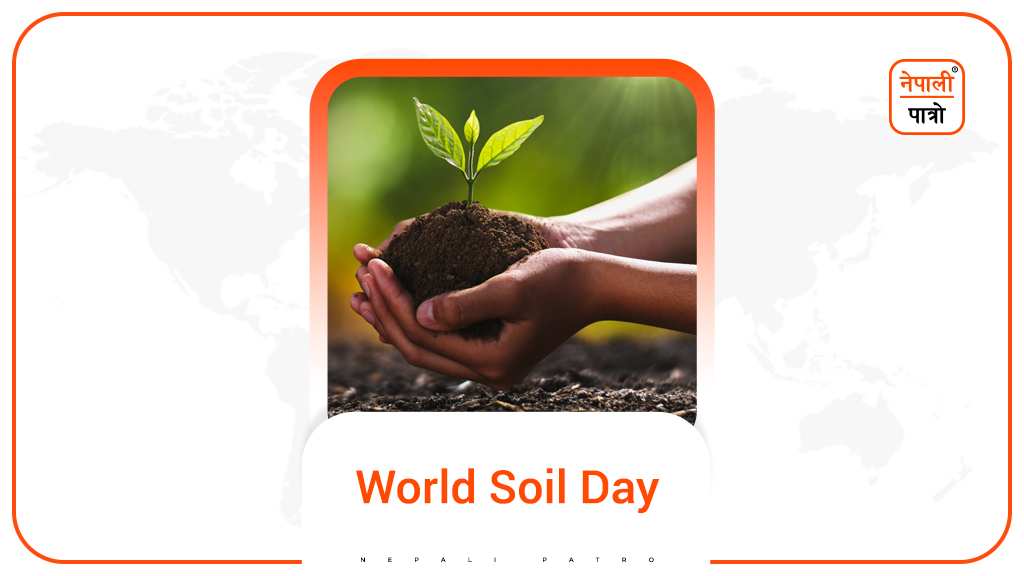
World Soil Day
By
Nepali Patro (Sudan Bhattarai Upadhyaya)
Soil is the foundation of life on Earth. According to ancient philosophical thought, the world is composed of five basic elements known as the Panchmahabhuta earth, water, fire, air, and space. These natural elements formed the basis for the origin of life. From the earliest single celled organisms to the evolution of humans, soil has continuously played an essential role in sustaining life.
As humans developed, they moved from place to place in search of food and survived on wild fruits and nuts. Over time, they discovered that the soil beneath their feet could be cultivated. With water, seeds, and basic tools, people learned to grow crops for survival. Later, the discovery of fire helped them cook the crops they harvested. Gradually, through centuries of learning, experimentation, and adaptation, humans built shelters, protected themselves from wildlife, and developed farming systems that relied entirely on the soil. It became clear that soil was central to life in the past, is essential in the present, and will remain equally important in the future.
To highlight this importance, the Food and Agriculture Organization of the United Nations (FAO) celebrates World Soil Day on December 5 every year. The initiative began in Thailand, where King Bhumibol Adulyadej first endorsed celebrating this day on his birthday. Later, on December 20, 2013, the United Nations General Assembly officially designated December 5 as World Soil Day, and the year 2015 was declared the International Year of Soils.
Without healthy soil, humans cannot fulfill their most basic needs, including food production. Soil conservation is therefore essential. Planting trees and maintaining forests help prevent soil erosion. A proper irrigation system also protects soil health and reduces the risk of land degradation. Modern agriculture requires farmers to go beyond traditional methods. Soil testing, appropriate seed selection, and scientific use of fertilizers and pesticides have been shown to significantly increase agricultural productivity.
Modern life has introduced many visible and invisible changes in the environment. While we may easily notice pollution in air or water, soil pollution often remains unnoticed unless tested in laboratories. Industrial waste, excessive use of chemicals, and other harmful human activities have already weakened nearly one third of the world’s soil. Soil has a limited capacity to filter pollutants, and once it exceeds that capacity, it loses fertility and productivity.
Healthy soil is vital not only for growing crops but also for maintaining clean groundwater, storing carbon, and regulating gases in the atmosphere. If soil health continues to decline, the world could face a severe food crisis in the future. Immediate action is needed to protect, restore, and sustainably manage soil resources.
World Soil Day serves as a reminder that soil is a living ecosystem that requires care, awareness, and responsible use. Just as volunteers work tirelessly for social good, we too must remain committed to protecting the soil that feeds us. Let us take today as an opportunity to appreciate the importance of good, fertile soil and to ensure that every living being can access safe and healthy food.