Utpatika Ekadashi
By
Nepali Patro
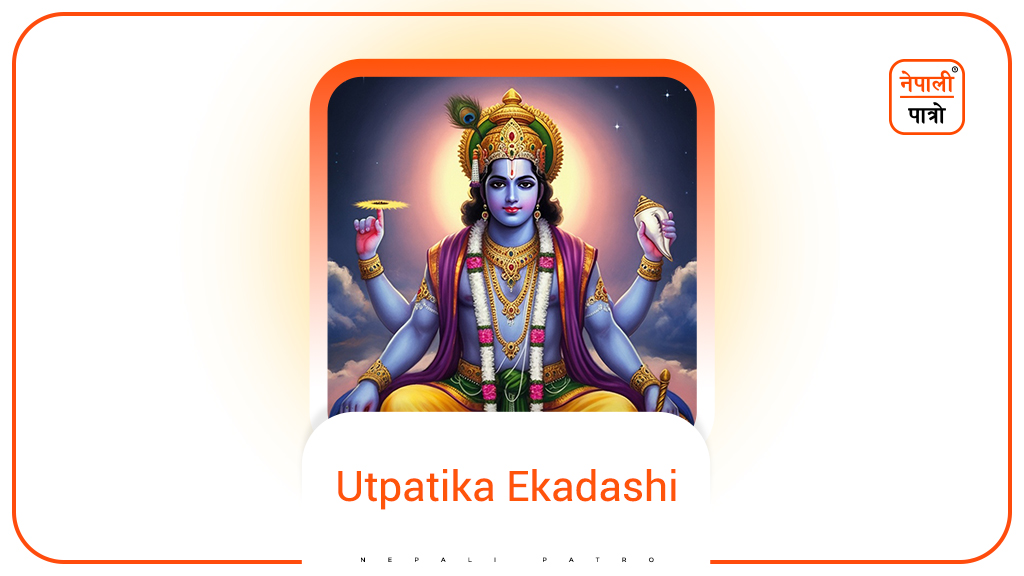
Utpatika Ekadashi falls in the Krishna Paksha of the month of Mangsir. It is also known as Vaitarani Ekadashi. According to religious belief, on this day of Ekadashi, a divine energy manifested from Lord Vishnu’s body as a goddess who protected the resting Lord by slaying the demon Mura. Since she appeared on the Ekadashi tithi, she was named Ekadashi. The day is also known as Vaitarani Ekadashi, as it is also believed that those who observe this fast are believed to be spared from crossing the Vaitarani river after death.
How to observe the fast
On the eve of Dashami, one should eat a sattvic (vegetarian) meal early in the evening and brush their teeth before bed. On Ekadashi morning, one should wake up during Brahma Muhurta, bathe, offer water to the Sun, and begin preparations for worship. A statue or image of Lord Vishnu, especially in his form as Keshav Narayan (the name of Vishnu for the month of Mangsir) is placed for prayer.
During worship, devotees offer items such as incense, lamps, naivedya, sesame seeds, tulsi leaves, amala, and panchamrita. One should recite or listen to the story of Ekadashi in the afternoon, sing bhajans in the evening, and perform aarti in the evening. Those who can maintain a full fast are encouraged to stay without food and remain awake at night. Those who cannot can have fruits. The next day, on Dwadashi, the fast concludes with a bath, worship, and offering meal and dakshina to a Brahmin, and after that, the devotee can eat with family.
The Story behind Utpattika Ekadashi
In the Dwapara Yuga, King Yudhishthira once asked Lord Krishna about the origin and significance of Utpattika Ekadashi. In response to this, Krishna narrated the story. A powerful demon named Talajang, who was born from Brahma’s lineage, lived in the city of Chandravati. Through intense penance, he gained immense strength as a boon from Lord Shiva. He began spreading terror across heaven, earth, and the underworld and came to be known as Mura.
Unable to withstand his oppression, the gods first sought help from Lord Shiva, who told them he could not undo his own boon and then advised them to seek Lord Vishnu’s help. Vishnu then set out to confront Mura. A fierce battle lasted for days. Though many demons were slain, Mura himself could not be defeated. Eventually, a tired Vishnu retreated to a cave near Badrikashram to rest.
Mura followed him there and attempted to kill while Vishnu slept. At that moment, a divine maiden emerged from Vishnu’s body and challenged Mura. She fought him and beheaded the demon. The sound of his fall woke Vishnu, who was surprised to see the demon slain and the goddess standing before him. She explained that she had manifested from his body when Mura tried to attack him while asleep to protect him.
Pleased and grateful, Lord Vishnu named her Ekadashi, as she had appeared on that auspicious day, and granted her a boon that whoever observes this Ekadashi fast with devotion would be freed from all sins and attain Vaikuntha.