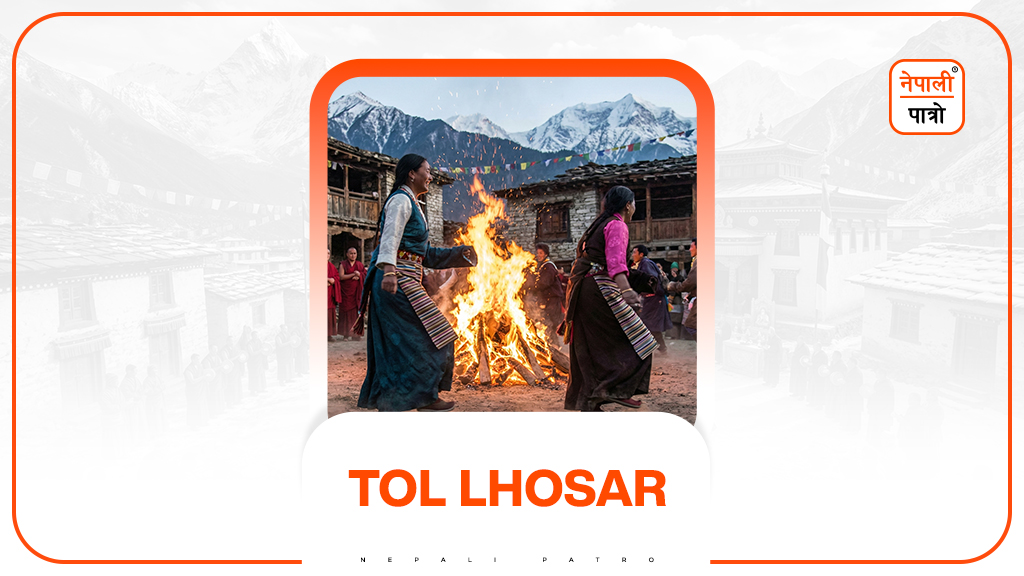
Tol Lhosar
By
Nepali Patro
Amidst the snow-capped mountains and the chilly winds, communities from Nepal’s most remote Himalayan regions celebrate Tol Lhosar to welcome the New Year. This festival is mainly observed in districts like Humla, Dolpa, and Manang. Although lesser-known, Tol Lhosar holds profound cultural significance for the Himalayan communities. For those living in harsh mountain environments, this festival is an opportunity to strengthen the connection with nature, time, and faith.
The word Lhosar means New Year, where Lho means year and Sar means new. The term Tol is interpreted as a time cycle or calendar year. This indicates that Tol Lhosar is an ancient festival, reflecting its deep roots in old astronomical and seasonal calculations. It is considered older than other forms of Lhosar due to its basis in ancient practices of astronomy.
Tol Lhosar is celebrated on the first day of the waxing moon in the month of Poush, according to the Nepali calendar. At this time, the Sun begins to move away from its lowest point. The festival focuses on purity, discipline, and spiritual preparation. During this occasion, people let go of past negative experiences and welcome the new year with a clean heart and environment.
In the days leading up to Tol Lhosar, people clean their homes, and this cleaning is believed to remove the dirt, bad luck, and negative energy from the past year. People bathe to purify their bodies and minds. A clean home is considered the foundation for bringing happiness, peace, and prosperity in the new year.
One of the most important rituals of Tol Lhosar is the Tsampa Offering. Tsampa is roasted barley or wheat flour. Under the leadership of a Lama or the eldest person in the community, prayers are performed. During this ritual, Tsampa is scattered into the sky while chanting mantras to ward off evil spirits and seek blessings from the deities. This ritual is done to pray for a good harvest, prosperity, and peace.