Mokshada Ekadashi
By
Nepali Patro
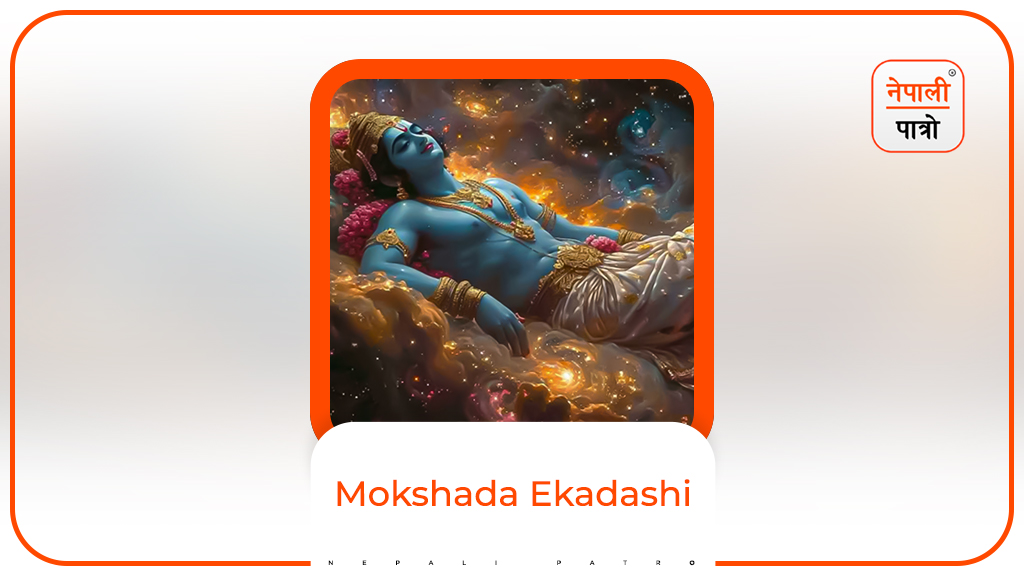
Mokshada Ekadashi falls on the Shukla Paksha of the month of Mangsir, which literally means “the day that grants liberation.” This sacred fasting festival is believed to free all living beings from sin and grant them moksha (liberation). It is also said that offering Tulsi leaves, incense, lamps, fruits, and other items to Keshav Narayan (the name of Lord Vishnu in the month of Mangsir) on this day with full devotion helps destroy all sins and leads to liberation.
On this very day, the battle of Mahabharata began, and Lord Krishna delivered the teachings of the Bhagavad Gita to Arjuna. So, this day is also observed as Gita Jayanti. Scriptures recommend to begin daily recitation of the Bhagavad Gita from this day onward.
How to observe the fast
The fasting procedure of Mokshada Ekadashi is similar to that of other Ekadashi fasts. On the evening of Dashami, one should eat a sattvic (vegetarian) meal and brush their teeth before going to bed. On the morning of Ekadashi, one should wake up during Brahma Muhurta, bathe in a river, pond, or clean water source, and offer water (argha) to the rising sun. After returning home and wearing clean clothes, one should place an image or idol of Lord Vishnu in the prayer room and worship him with devotion by offering Panchamrit, food offerings, sesame seeds, and Tulsi leaves using the Shodashopachara (sixteen-step) ritual.
In the afternoon, one should read or listen to the Mahatmya of Ekadashi. In the evening, one should perform aarti and sing bhajans and stay awake through the night in a jagram. On Dwadashi, one should again bathe, offer prayers, and complete the ritual by offering tika, dakshina, and food to a qualified Brahmin. Afterward, the devotee may also end their fast with a meal. Observing the fast in this way is believed to destroy all sins, both known and unknown, grant great punya (merit), and ensure a place in heaven after death.
The Story behind Mokshada Ekadashi
According to the Padma Purana, during the Dwapara Yuga, Yudhishthir once asked Lord Krishna about the significance of Mokshada Ekadashi. In response, Krishna shared this story. Once, there was a king named Vaikhanas, who ruled over a prosperous and harmonious kingdom.
One night, King Vaikhanas saw a dreadful dream where his deceased father was suffering severe torment in Naraka, which deeply troubled the king. The next morning, he consulted with wise astrologers, sages, and priests to find a remedy for this distressing dream. They advised him to visit the all-knowing sage Parvat Muni.
He went to visit the sage and after listening to the king’s story, Parvat Muni revealed that his father had committed a grave sin during his lifetime, which had led to his current suffering in hell. When the king asked what could be done to free his father’s soul, the sage advised him to observe the Mokshada Ekadashi fast on the Marga Shukla Ekadashi with devotion and to dedicate all the resulting punya to his deceased father. The sage also explained the proper rituals of the fast.
Following the sage’s guidance, King Vaikhanas observed the Mokshada Ekadashi fast, performed all the rituals with devotion, and dedicated the punya to his father. As a result, his father was liberated from hell