International Mountain Day
By
Krishma Joshi
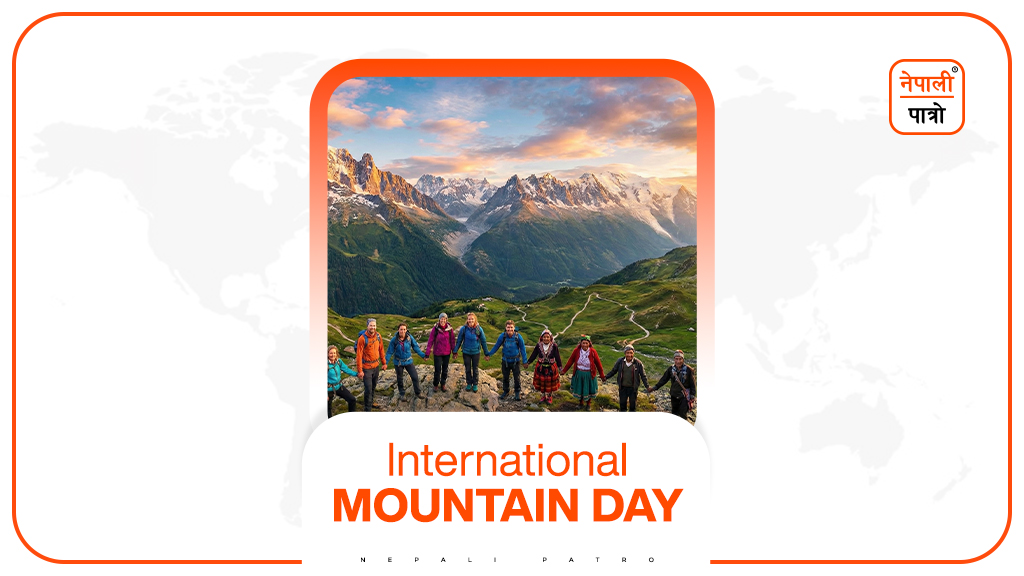
International Mountain Day is observed globally on December 11th every year. It serves as a vital reminder of the Earth’s towering natural architecture and the millions of lives sustained by these formidable landscapes.
For Nepal, this day is very significant. Nepal is home to eight of the world’s 14 mountains over 8,000 meters, including Sagarmatha (Mount Everest), the planet’s highest peak at 8,848.86 meters. The country’s mountains are the bedrock of its culture, a spiritual link, and the engine of its economy, providing vital fresh water for over half of humanity across South Asia via glacial melt.
The Unprecedented Threat
Nepal’s mountain ecosystems are highly vulnerable to global climate change, facing warming rates higher than the global average. This leads to escalating dangers:
Glacier Retreat and GLOFs: Accelerated melting is causing glaciers to shrink and glacial lakes to swell, increasing the risk of catastrophic Glacial Lake Outburst Floods (GLOFs) that threaten communities and infrastructure.
Livelihood Disruption: Unpredictable weather and temperature shifts disrupt traditional mountain agriculture, challenging food and water security for indigenous peoples.
Global Responsibility
The challenges in the Himalayas are a result of global emissions. On this International Mountain Day, the call is for global partnership and action:
Support Sustainable Tourism: Choosing responsible operators in Nepal that follow “Leave No Trace” principles.
Advocate for Climate Action: Recognizing that worldwide efforts to reduce carbon emissions directly protect the Himalayan glaciers and the immense water resources they hold.
Preserve Traditional Wisdom: Supporting local conservation efforts that integrate the deep-seated cultural reverence and knowledge of Nepal’s mountain people.
The health of the Nepali Himalayas is a barometer for the health of our planet. By safeguarding these magnificent mountains, we secure the future for millions of people and the world’s most precious resource.