International Migrants Day
By
Nepali Patro
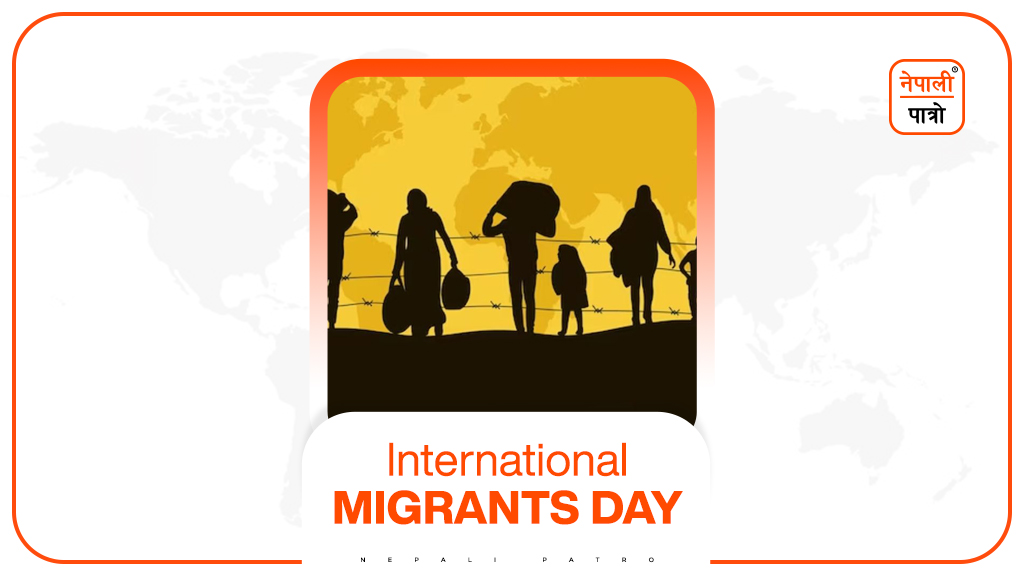
International Migrants Day is celebrated worldwide on 18 December every year. This day holds special significance for Nepal, as millions of Nepali youth are far from their homeland in search of livelihood, employment and future prospects. In the current situation where migration has become a reality of Nepali society, this day is not just a matter of formal commemoration, but rather an important opportunity to rethink the rights, dignity and security of migrant workers.
This day is celebrated in memory of the ‘International Convention on the Protection of the Rights of All Migrant Workers and Members of Their Families’ adopted by the United Nations in 1990. The Convention emphasizes that migrant workers are also entitled to equal human rights and that their labor, safety, dignity and social protection be ensured. The message of this Convention is even deeper and more relevant for a labor-exporting country like Nepal.
Nepal’s Migration Situation
Foreign employment has become a compulsion in Nepal. Limited employment opportunities, low income, unstable economy and uncertainty about the future force a large number of young people to emigrate every year. According to available data, about four lakh youth from Nepal annually obtain work permits for foreign employment. According to the Department of Foreign Employment, the fact that 8,39,266 work permits were issued in the fiscal year 2081/82 clearly shows the prevalence of migration.
Remittances sent by Nepalis working abroad have provided a great help to the country’s economy. The role of remittances is important in earning foreign exchange, reducing poverty and improving the living standards of families. But another aspect of this is equally serious. With a large portion of the young workforce living outside the country, there is a shortage of skilled labor in the agriculture, industry, education and innovation sectors. Problems such as villages being limited to the elderly and children, weakening social structures and family fragmentation are also realities linked to migration.
Challenges of Migrant Workers
Many Nepali workers are forced to face unsafe workplaces, low wages, long working hours, labor exploitation and sometimes inhumane treatment. Lack of legal information, language barriers, and undocumented status further complicate their situation. The risks are even more serious for women.
The core purpose of International Migrants Day is to acknowledge the reality that the country’s economy is powered by the sweat and toil of millions of Nepalis, and to ensure their rights, security, and dignity.