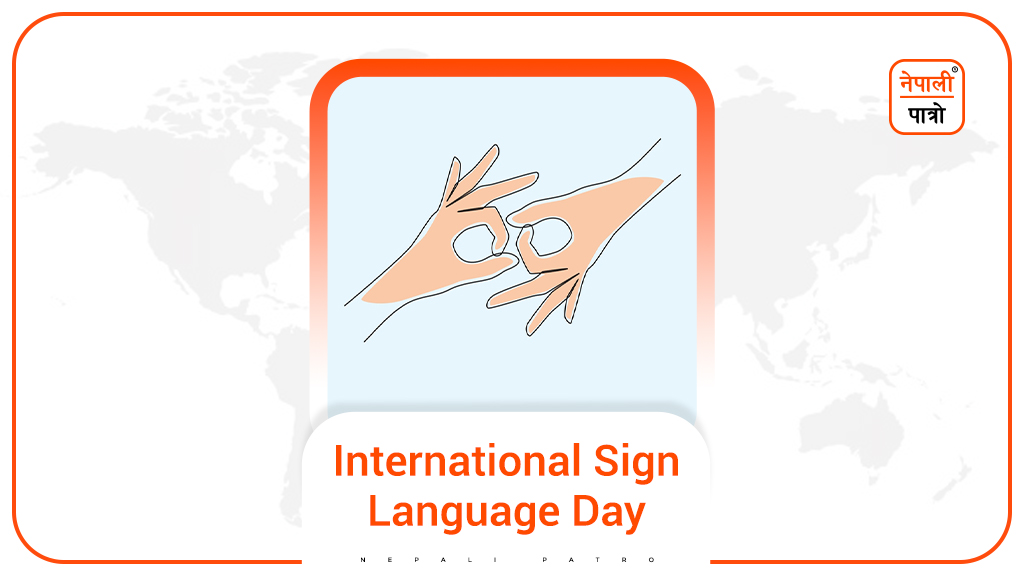
International Day of Sign Languages
By
Nepali Patro
Language is a bridge, not just of words but of understanding. For millions of deaf people around the world, sign language is that bridge. Observed every year on September 23, the International Day of Sign Languages honors the rich linguistic and cultural contributions of deaf communities and promotes the recognition of sign languages as a fundamental human right.
This global observance serves as a reminder that everyone deserves the right to communicate freely, fully, and equally, regardless of how they express themselves.
Background and Significance
The United Nations General Assembly proclaimed September 23 as the International Day of Sign Languages in 2017. The date was chosen to commemorate the establishment of the World Federation of the Deaf (WFD) in 1951, an organization that has played a vital role in advocating for the rights of the deaf community.
This day is part of the broader International Week of the Deaf, which has been celebrated since 1958. The observance draws attention to the unique linguistic and cultural identity of deaf communities and emphasizes the need for inclusion, accessibility, and respect.
What is Sign Language?
Sign language is a visual language that uses hand gestures, facial expressions, and body movements to convey meaning. It is not universal, as different countries have their own national sign languages such as American Sign Language (ASL), British Sign Language (BSL), and Nepali Sign Language (NSL).
Each sign language is a complete natural language with its own grammar and syntax. It is a powerful tool for communication, education, and cultural expression within deaf communities.
Why It Matters
Equal Rights and Access: Sign language is a key to achieving equal opportunities in education, employment, and healthcare for deaf individuals.
Cultural Identity: For many, sign language is more than a communication tool. It is a symbol of cultural pride and identity.
Inclusion in Society: Promoting sign language enhances social inclusion and reduces discrimination and barriers in everyday life.
Efforts and Awareness in Nepal
In Nepal, the Nepal National Federation of the Deaf and Hard of Hearing (NFDH) plays a central role in advocating for the use of Nepali Sign Language (NSL). Efforts have been made to incorporate sign language in media broadcasts, education, and public services, although challenges remain in terms of its accessibility and awareness.
Conclusion
The International Day of Sign Languages is a powerful reminder of the importance of linguistic diversity and the need to build a more inclusive society. Recognizing and promoting sign languages not only empowers deaf communities but also strengthens the universal value of human connection through communication.