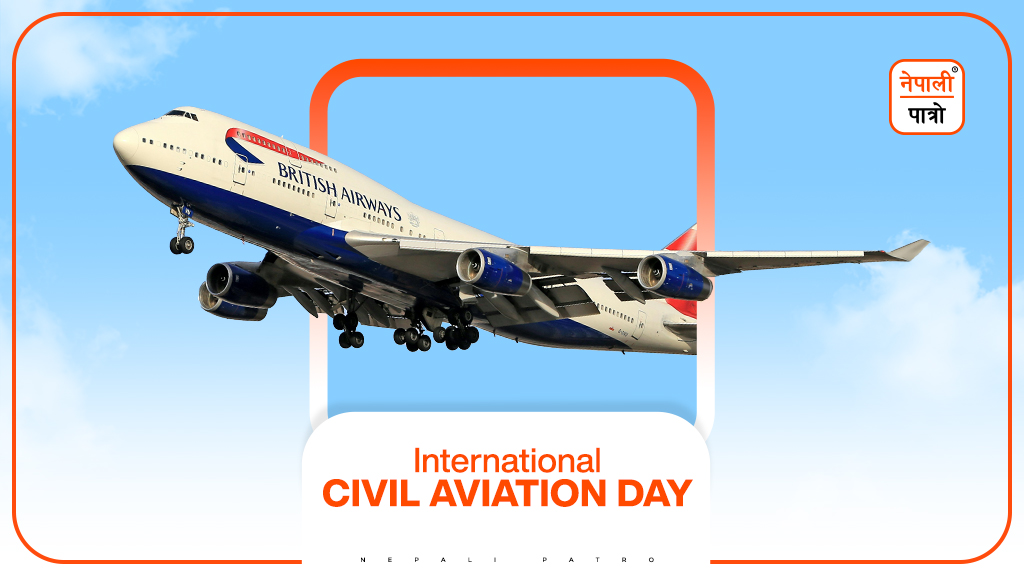
International Civil Aviation Day
By
Nepali Patro
International Civil Aviation Day, observed annually on December 7th, holds immense significance for Nepal. In a nation defined by the rugged terrain of the Himalayas, civil aviation is not just a mode of transport but a fundamental lifeline. Air travel is often the only reliable connection between remote mountain communities and the rest of the world, ensuring the delivery of essential supplies, facilitating emergency services, and underpinning the critical tourism sector.
Economic and Connectivity Engine
The aviation sector contributes significantly to Nepal’s Gross Domestic Product (GDP), primarily by facilitating tourism, which employs hundreds of thousands of people. Major airports like Tribhuvan International Airport (TIA) in Kathmandu, and the new international gateways in Pokhara and Bhairahawa, serve as crucial entry points for visitors and cargo. Domestically, challenging Short Take-off and Landing (STOL) airfields—such as Lukla and Jomsom—are non-negotiable hubs. These critical airstrips sustain regional economies and provide access to world-famous trekking routes, making air services indispensable for both local survival and global adventure tourism.
The Challenge of Safety Oversight
Despite its essential role, Nepal’s aviation sector faces acute and persistent challenges, primarily concerning safety oversight. While the country has achieved technical progress and was removed from the ICAO’s significant safety concerns list in 2017, Nepali carriers remain on the European Union’s air safety blacklist. This ongoing issue hinders economic growth and impacts the country’s global reputation. Furthermore, key reforms, including the ICAO-recommended separation of the Civil Aviation Authority of Nepal (CAAN) into distinct regulatory and service-providing bodies, have been slow to fully implement.
Commitment to a Safe Future
As the global theme emphasizes “Safe Skies, Sustainable Future,” this day serves as a critical reminder for Nepal to prioritize the full and effective implementation of international safety standards. The future viability of the country’s connectivity and economic prosperity depends on strengthening regulatory mechanisms, modernizing infrastructure, and ensuring the highest safety protocols, especially in the demanding remote operations. International cooperation and a focused commitment to reform are essential steps to make Nepal’s skies as safe as they are scenic, fulfilling the true spirit of global civil aviation.