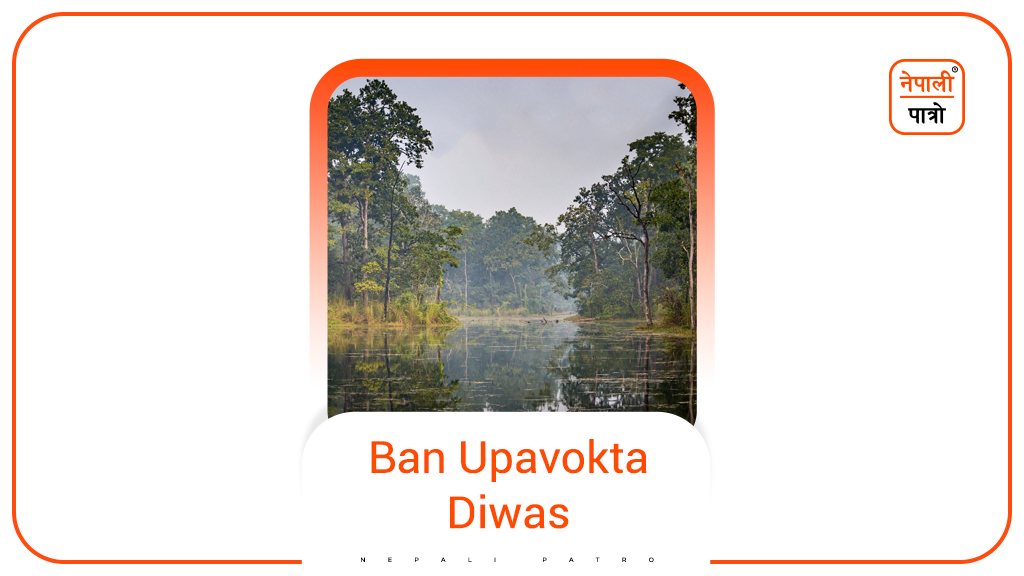
Forest Users Group Day
Every year on Jestha 18, Nepal observes Forest Users Group Day (Ban Upabhokta Diwas). This day commemorates the historic decision made in 2051 B.S. (1994 A.D.) by the government to hand over forest conservation responsibilities to local users. It honors the role of the public in the conservation, management, and utilization of forests through community forestry.
Community Forests
Nepal’s Community Forestry Program is regarded as one of the most successful initiatives in the world. The active involvement of community forest user groups has proven that forests are not just profit-generating resources but also spaces for collective ownership and shared responsibility.
According to the 2011 National Census (2068 B.S.), 84,670 households are involved in community forestry, directly benefiting 557,708 individuals. These users have not only contributed to conserving biodiversity but have also improved rural livelihoods through economic, social, and environmental improvements.
Forest Classification
In Nepal, forests are classified into seven types: Community, Collaborative, Government, Private, Religious, Protected, and Leasehold Forests. These classifications represent different ownership and management models. Geographically, forests are divided into six ecological zones: Tropical, Subtropical, Temperate, Cool Temperate, Subalpine, and Alpine. With diverse vegetation like Sal, Pine, Deodar, Rhododendron, Birch, and Juniper, Nepal is rich in forest biodiversity.
Significance of Forest Users Day
The key objectives of Forest Users Day include:
- Raising public awareness about sustainable forest use and conservation,
- Recognizing the contributions of community forest user groups and federations,
- Empowering women and youth leadership, and
- Promoting local leadership and collective efforts.
The initiatives of community forest user groups have not only ensured resource conservation but also contributed to inclusive development and equal opportunities in rural communities.