Chir Ko Utthan
By
Nepali Patro
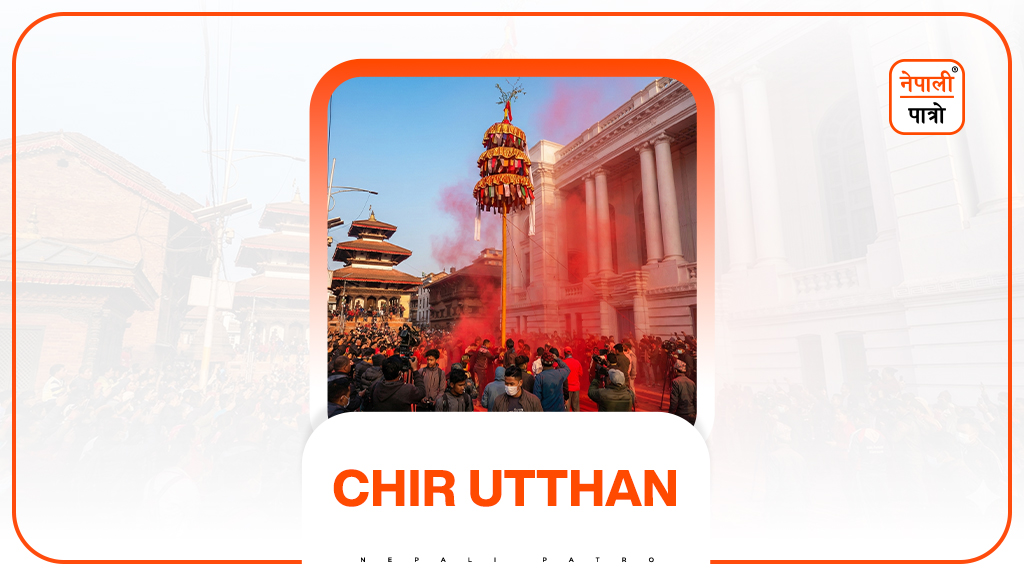
Chir Ko Utthan, also known as Chir Swaye, is a religious and cultural tradition deeply associated with the Phagu festival celebrated in the month of Falgun. This tradition is particularly associated with Holi, which is known as Fagu Purnima in Nepal. The practice of burying and raising a Chir expresses faith, tradition, and community unity in Nepali society.
“Chir” refers to a long pole made of bamboo or wood, which is decorated with colorful cloth and flags. The Chir is buried on the auspicious day of the eighth day of the month of Falgun. This act marks the formal beginning of the Phagu festival. The tradition of burying a Chir is considered a symbol of the victory of truth and faith over falsehood and ego.
Religious Background and Significance
The tradition of Chir is believed to be related to the story of devotee Prahlad and Holika. According to the Puranas, the demon king Hiranyakashipu pressured his son Prahlad to abandon his devotion to Lord Vishnu. But Prahlad remained adamant. Finally, Holika was burnt and Prahlad was safe. It is believed that the tradition of burying and raising the Chir developed in memory of this event as a symbol.
The tradition of burying the Chir is considered historically important, especially in the Hanuman Dhoka Durbar area of Kathmandu. Here, the beginning of the Phagu festival is announced after the Chir is buried. This practice also shows the relationship between traditional state system and religious rituals.
Method of raising the Chir
The Chir is ritually lowered on the day of Phagu Purnima or the day after. In some places, the Chir is burnt, while in others, it is customary to immerse it in the river. During the raising, worship, distribution of prasad and group participation are observed. This strengthens harmony and harmony between the community.
The raising of the Chir is an integral part of Nepali religious and cultural life. This tradition associated with Phagu Purnima expresses the sense of victory of truth, unity of the community and continuity of tradition. Despite the change of time, the Chir Swaye has maintained its cultural importance in Nepali society even today.