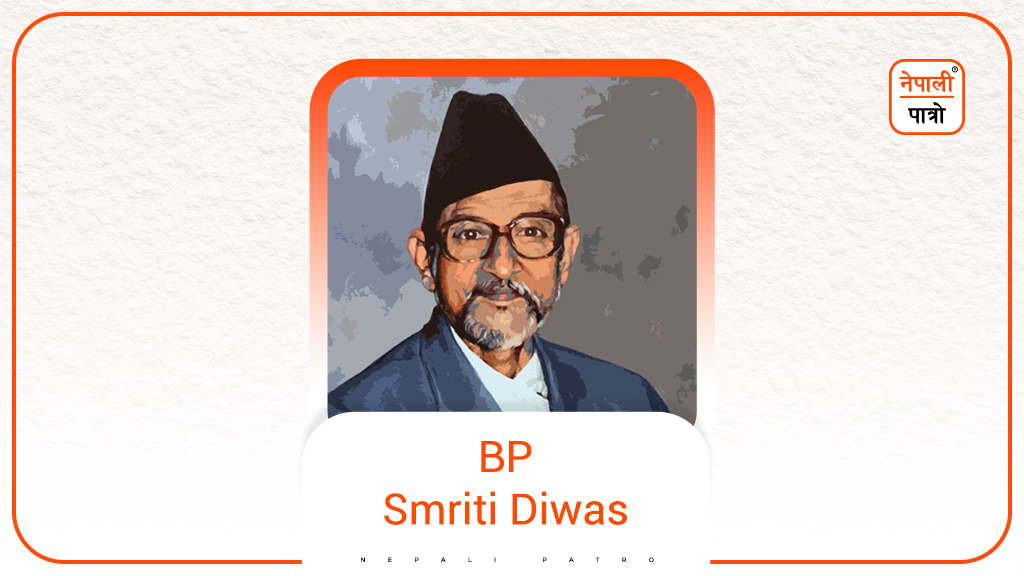
BP Memorial Day
By
Nepali Patro
Bishweshwar Prasad Koirala, also known as BP Koirala, was much more than just Nepal’s first democratically elected Prime Minister. He was a remarkable writer, a thoughtful political philosopher, and a staunch advocate for democracy and social justice. The impact of his work in politics and literature can still be seen in Nepal today. BP Memorial Day is observed every year on Shrawan 6 to honor his life and legacy.
Nepal’s First Democratically Elected Leader
Born on September 8, 1914, in Banaras, India, Bishweswar Prasad Koirala saw both colonial rule and people fighting for change around him. Being guided by democratic ideals, he took part in India’s freedom struggle and then turned to helping Nepal’s political development.
In 1959, after creating a democratic constitution, Nepal held its first general elections. His party, the Nepali Congress, gained a majority under BP Koirala, he became the first democratically elected Prime Minister in Nepal. Unfortunately, his time in office was cut short in 1960 when King Mahendra dismissed the elected government, imposed the Panchayat system, and imprisoned Koirala, marking the start of a long and challenging period of political repression.
Resistance, Reconciliation, and Legacy
Despite spending nearly eight years in prison and later living in exile, BP Koirala never wavered in his commitment to democracy. He remained a strong voice for political pluralism and civil liberties, rejecting offers of release that wanted him to abandon his ideals. In 1976, he returned to Nepal from exile after years of authoritarian rule. Until his death on July 21, 1982, BP Koirala continued to advocate for democratic socialism, national unity, and individual freedom.
Democratic Socialism and National Unity: His Core Principles
BP Koirala was a strong proponent of “National Unity and Democratic Socialism.” He envisioned a Nepal where democracy would ensure freedom, equality, and justice for all—irrespective of class, caste, or ethnicity.
He emphasized the importance of press freedom, rule of law, and individual dignity—principles that are still foundational to Nepal’s democratic framework. His political philosophy blended idealism with pragmatism, calling for social change through democratic means.
A Literary Voice Ahead of His Time
Apart from politics, BP Koirala made a significant impact on Nepalese literature. His works delved into the minds of people, concentrating on women, with a depth that was unusual in Nepali literature. His notable works include Sumnina, Modiaain, Hitler Ra Yahudi, Doshi Chasma, Teen Ghumti, and many more.
Through literature, BP humanized political ideals, portraying the tension between individual freedom and societal norms. His writings offered a critical, empathetic lens on Nepali society and remain deeply relevant today.