Baraha Jayanti
By
Nepali Patro
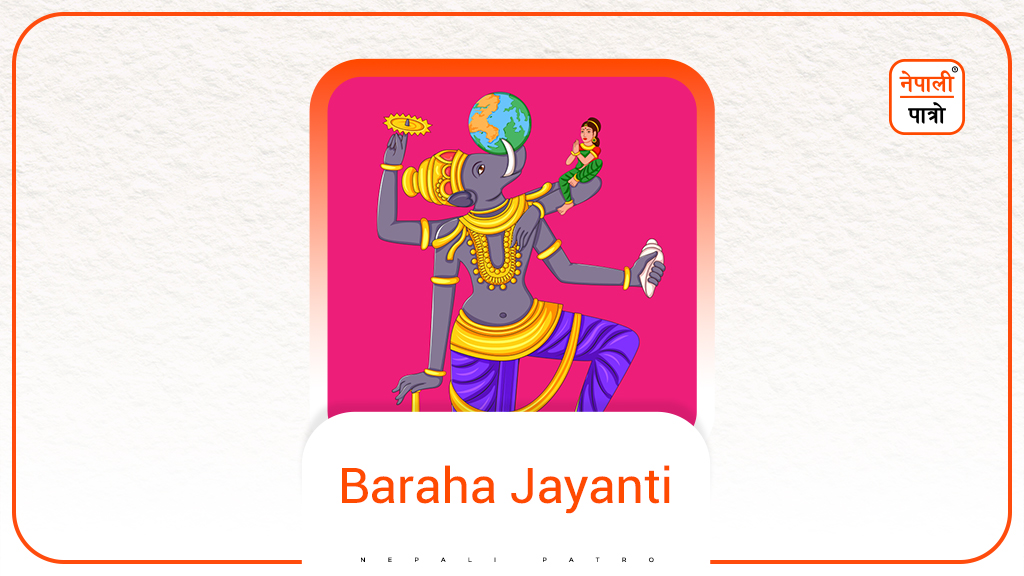
Baraha Jayanti is observed on the Tritiya of Shrawan Shukla Paksha. On this day, devotees commemorate the incarnation of Lord Vishnu as Baraha (wild boar), who is believed to have rescued the Earth from destruction. This incarnation is said to have taken place during the Satya Yuga to free the Earth from the tyranny of the asura Hiranyaksha.
The Rise of Hiranyaksha and His Reign of Terror
According to the Rigveda, Hiranyaksha was the son of Sage Kashyapa. After performing intense penance, he received a boon from Lord Brahma that no weapon or divine force could kill him. After receiving this blessing, he became arrogant and unleashed terror across the universe. He conquered all three realms and, in an act of ultimate destruction, submerged the Earth to the depths of the cosmic ocean with the intention of killing all living beings.
In desperation, the gods and all living beings sought refuge in Lord Brahma, but he said that he was helpless because he had granted the boon. He advised everyone to pray to Lord Vishnu. Hearing their prayers, Vishnu took the form of Baraha and descended to restore balance.
Baraha plunged into the depths and lifted the Earth on his tusks, bringing it safely back to its rightful place. This Hiranyaksha, who challenged Varaha to battle. What followed was an intense war that lasted for five thousand years. In the end, Lord Varaha defeated and killed the demon, thus restoring cosmic order.
The Symbolic Form of Baraha
According to the Baraha Purana, Lord Vishnu appeared from Brahma’s nostril in the form of Baraha. This incarnation had the head of a boar and the body of a human. Beyond being a symbol of strength and salvation, this form is rich in symbolic meaning:
- Feet – Represent the four Vedas
- Tusks – Signify sacrificial offerings
- Eyes – Embody day and night
- Head – Symbolizes Lord Brahma
- Mouth – Represents the sacred fire pit (Yajna Kunda)
- Tusks – Serve as tools for sacrificial rituals
- Body hair – Said to have given rise to Kusha grass, used in rituals
Rituals and Religious Significance
On Baraha Jayanti, devotees worship Lord Baraha with devotion and observe fasts. The day holds special significance as a reminder of divine protection and the preservation of Earth. Through prayers, storytelling, and ritual offerings, devotees honor the compassion and power of Lord Vishnu.
Baraha Jayanti is a celebration of truth, righteousness, and divine grace. The form of Lord Vishnu as Baraha continues to inspire faith among believers, symbolizing the eternal promise of protection for both Earth and humanity.