International Day for the Elimination of Nuclear Weapons
By
Nepali Patro
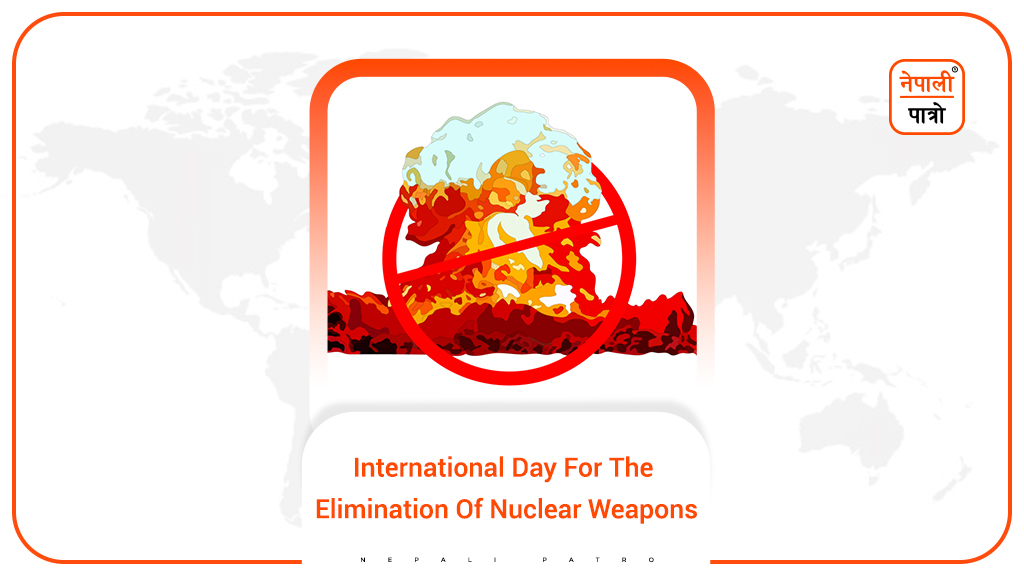
The International Day for the Elimination of Nuclear Weapons, observed every year on September 26, serves as a reminder of the urgent need to achieve a world free of nuclear arms. Established by the United Nations General Assembly in 2013, the day calls on nations to reaffirm their commitment to disarmament and raise awareness of the catastrophic consequences of nuclear weapons.
Historical Background
The adoption of this day was influenced by the first-ever high-level meeting of the UN General Assembly on nuclear disarmament, held on September 26, 2013. It reflects decades of global efforts to eliminate nuclear weapons which starting from the atomic bombings of Hiroshima and Nagasaki in 1945 to the ongoing negotiations under the Treaty on the Non-Proliferation of Nuclear Weapons (NPT) and the Treaty on the Prohibition of Nuclear Weapons (TPNW).
Why This Day Matters
The use of nuclear weapons poses immense humanitarian and environmental threats, with long-lasting effects on health, climate, and development. Geopolitical tensions and arms races increase the risk of nuclear confrontation, whether by design, accident, or miscalculation. The continued existence and modernization of nuclear arsenals contradict international humanitarian law and the principles of peace and security.
Current Challenges
Despite international efforts, over 12,000 nuclear weapons still exist worldwide. Some countries are expanding or modernizing their arsenals, and new technologies like hypersonic missiles and cyber warfare further complicate disarmament efforts. The erosion of arms control agreements, such as the INF Treaty, adds to global insecurity.
Global Efforts and Progress
One of the most significant milestones in recent years has been the adoption of the Treaty on the Prohibition of Nuclear Weapons (TPNW), which entered into force in 2021. This landmark agreement legally binds its signatories to prohibit the use, development, testing, and possession of nuclear weapons, marking a major step toward global disarmament. Alongside such treaties, the United Nations continues to play a central role in advocating for a world free of nuclear arms through various initiatives, including those led by the UN Office for Disarmament Affairs (UNODA).
Moreover, civil society movements have been instrumental in pushing the disarmament agenda forward. Notably, the International Campaign to Abolish Nuclear Weapons (ICAN), which received the Nobel Peace Prize in 2017, has mobilized global public opinion and encouraged governments to commit to disarmament through sustained advocacy and awareness campaigns.
What You Can Do
While nuclear disarmament may seem like a distant issue, individuals can still play a crucial role in promoting peace. Raising awareness by educating oneself and others about the risks of nuclear weapons is an important first step. Supporting global and local disarmament campaigns and organizations that work toward a nuclear-free world helps amplify collective action. Engaging with policymakers and advocating for peaceful conflict resolution and disarmament policies can also bring about tangible change. Through informed participation and persistent public pressure, individuals can contribute to the global movement for a safer, nuclear-free future.
Conclusion
In a world where peace is fragile and nuclear threats persist, disarmament is not only a security issue but a moral imperative. Only through sustained international cooperation and public engagement can we hope to secure a future free from the threat of nuclear war.