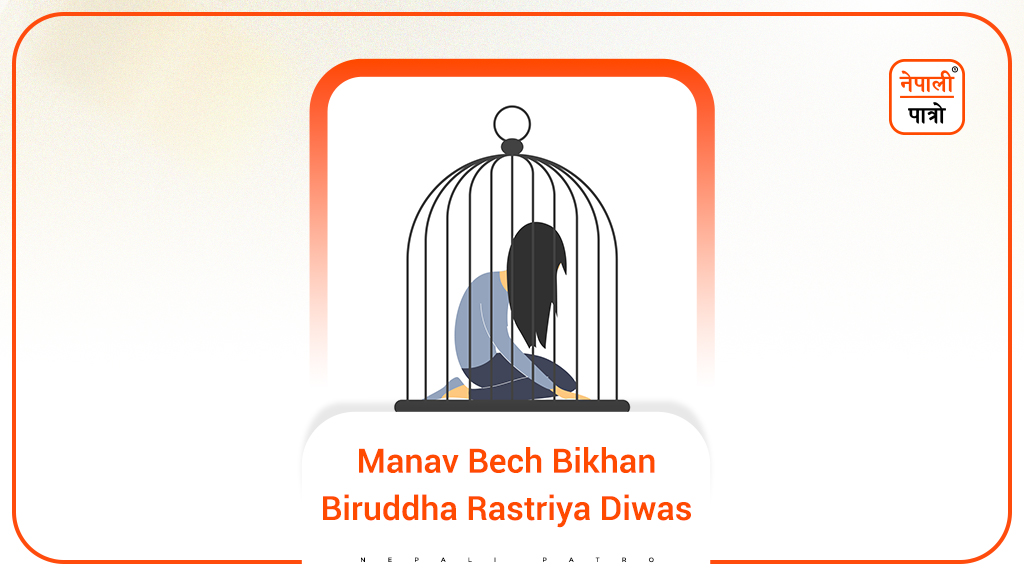
National Day Against Human Trafficking
By
Nepali Patro
Every year on September 5, Nepal observes the National Day Against Human Trafficking. This day is dedicated to raising awareness, promoting prevention, and reinforcing collective efforts to combat the crime of human trafficking, which continues to be a major human rights concern in the country. The day also marks the enactment of the Human Trafficking and Transportation (Control) Act, 2064 (2007), a major achievement in Nepal’s battle against trafficking.
The Reality of Human Trafficking in Nepal
Nepal faces serious challenges in addressing human trafficking. Factors such as poverty, unemployment, gender inequality, illiteracy, and political instability increase vulnerability, particularly among women and children. Victims are often tricked with false promises of jobs, education, or marriage and end up being exploited in labor markets, forced marriages, or the sex trade both inside the country and abroad. The open border between Nepal and India further facilitates cross-border trafficking
Efforts and Progress
Over the years, Nepal has made notable efforts to counter trafficking like:
- The Human Trafficking and Transportation (Control) Act criminalizes all forms of trafficking and provides legal protection to survivors.
- Multi-stakeholder strategies have been implemented to coordinate efforts across sectors, led by the Ministry of Women, Children and Senior Citizens.
- Maiti Nepal and Shakti Samuha, along with other NGOs, have saved many victims, given them support, offered training and worked to ensure the rights of survivors are respected.
- Programs and media campaigns aim to educate the public on identifying and preventing trafficking, especially in rural and high-risk communities.
Challenges That Remain
Despite these efforts, several challenges persist:
- Weak law enforcement and corruption hinder the prosecution of traffickers.
- Many survivors find it hard to get rehabilitation and often end up without any kind of reintegration programs or work opportunities.
- Underreporting and limited data prevent accurate national statistics.
- Online exploitation and digital recruitment have emerged as newer forms of trafficking, complicating detection and control.
The Role of Communities and Individuals
Human trafficking is not only a legal issue but also a community concern. Everyone has a role to play in preventing it. Parents, teachers, and youth should be educated about safe migration and the dangers of fraudulent employment schemes. Supporting survivor-led advocacy and reducing stigma are key to long-term reintegration.
Conclusion
The National Day Against Human Trafficking is a call to collective action. It reminds us that while laws and organizations are critical, sustainable change requires informed communities, empowered individuals, and continuous vigilance.