Kurma Jayanti
By
Nepali Patro
Every year on Baisakh Shukla Purnima, Hindus celebrate Kurma Jayanti.
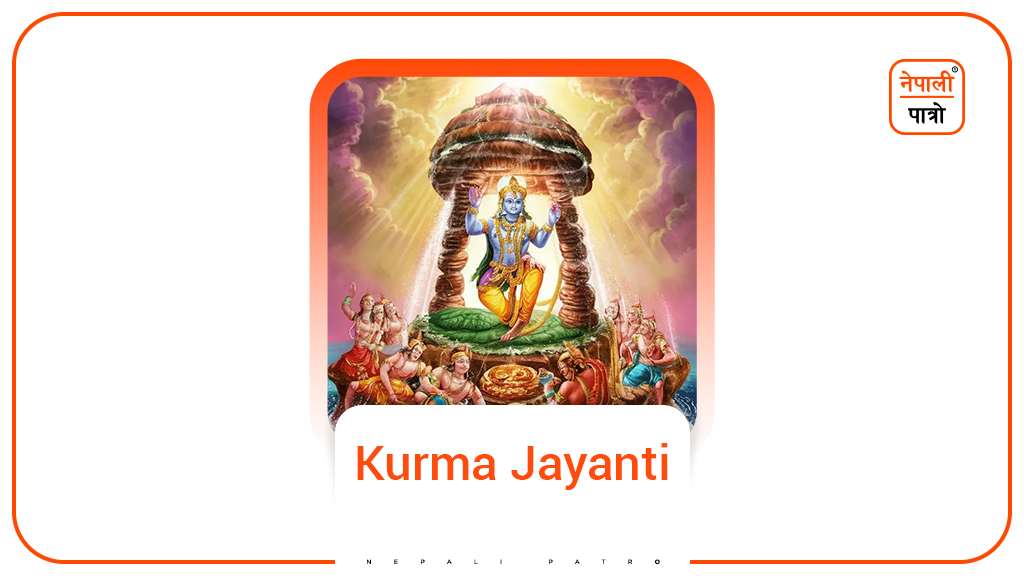
This day commemorates the occasion in the Satya Yuga when Lord Vishnu took his second incarnation as Kurma, the tortoise. The Kurma Avatar was essential for accomplishing the great event of the Samudra Manthan.
The Second Incarnation of Lord Vishnu
During Samudra Manthan, the gods and demons had agreed to churn the ocean as a test of their power. The Mandarachal mountain was used as the churning rod, and the serpent Sheshnag as the rope. However, during the churning, the Mandarachal mountain began to sink into the ocean due to its weight.
To solve this problem, Lord Vishnu took the form of a tortoise and placed the heavy mountain on his back, preventing it from sinking. In this way, the ocean churning became possible.
The first thing that emerged from the churning was Halahal, a deadly poison, which Lord Shiva consumed to save the universe. After that, 13 divine treasures (Ratnas) including Goddess Lakshmi, the divine cow Kamdhenu, the celestial nymph Rambha, the divine horse Ucchaisrava, the Kaustubha gem, Parijat tree, and Kalpavriksha were obtained. Finally, Amrit, the nectar of immortality, was also produced.
Since this event took place on the full moon day of Baisakh’s bright fortnight, the day holds special significance. On the occasion of Kurma Jayanti, people worship Lord Vishnu’s Kurma incarnation and observe fasting. There is also a tradition of worshipping tortoises on this day.
Kurma Jayanti is celebrated to remember how Lord Vishnu contributed to maintaining balance in the universe, faith, and righteousness.